


Mindful Vision Quest Mindful Vision Quest
An older woman by a window lifting a hand to shield her eyes from low afternoon sunlight

Symptom guide for adults 50 and over

A Guide to Age Related Vision Symptoms

A working guide, not a checklist you pass or fail. It describes the age related vision symptoms adults most often report, what each one feels like in daily life, and how to describe it clearly enough that an eye care professional can act on it.

Read it with a notepad if you can

The single most useful thing you can bring to an appointment is a short, specific description. Four things carry almost all of the value: what you notice, when you notice it, which eye, and how long it has been going on. Everything on this page is written to help you fill in those four lines.

What
Letters merge at the end of a paragraph, or the sign is visible but not readable.
When
Worse in the evening, in low light, or after long screen use.
Which eye
Cover one eye, look across the room, then switch. Note the difference.
How long
Gradually over months reads differently to your clinician than sudden onset.

Blur that arrives on schedule is a different problem to blur that never leaves.

Almost every symptom below is a pair: how it behaves over a day, and how it behaves over a year. That split is where the useful information lives.

Reading glasses and a folded newspaper on a kitchen table with a hand reaching toward them

Blurred vision: the broadest symptom

Blurred vision is the complaint that covers the most ground. It can mean a refractive error that glasses will fix, dry eye that fluctuates through the day, cataract, or a retinal problem. The quality of the blur matters more than the blur itself.

Blur that is worse when you are tired or after screen use often points to tear film instability. Blur that is constant and slowly worsening over months is more typical of cataract or a changing prescription. Try to notice whether it is the same in both eyes. Cover one eye, look at something across the room, then switch. A marked difference between eyes is a reason to seek care sooner rather than later.

Notice this

Did new glasses help? If a prescription change sharpens things for a while and then fades, that pattern is informative and worth mentioning.

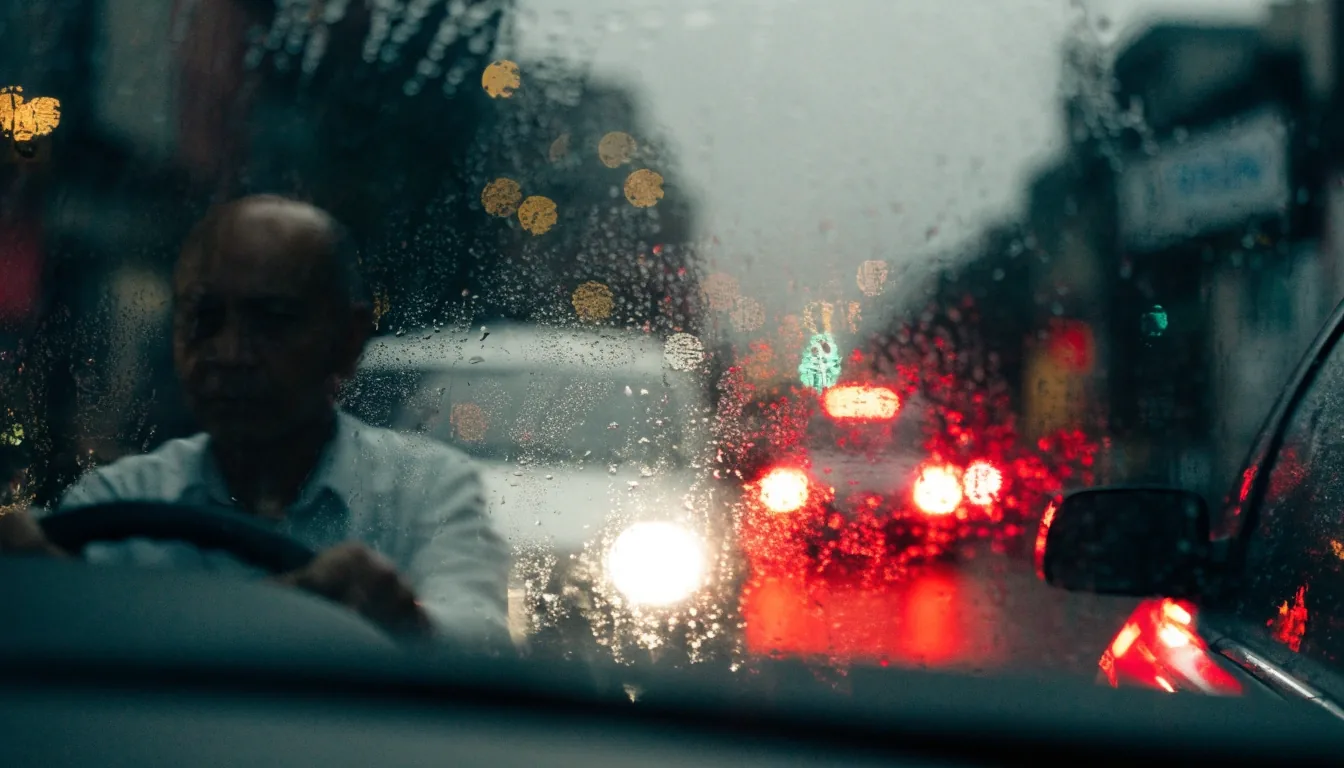
View through a rain-streaked windscreen in slow traffic with headlights blooming into halos

Cloudy vision and the feeling of a dirty windshield

Many people describe cataract not as blur but as haze. Colours lose bite, whites look slightly yellow or grey, and light sources develop halos. The comparison to looking through a smudged windshield comes up constantly, and it is a fair description of what is happening.

Cataract develops in the lens, which sits in front of the retina, so it affects the whole visual field rather than one spot. It is typically gradual and painless.

In Indonesia, cataract and refractive error are the leading causes of visual impairment in adults aged 50 and over. That makes cloudy vision one of the most common reasons older adults eventually seek care.

Cloudy vision from cataract is not an emergency. What changes the timing is how much it interferes with driving, reading, and recognising faces. That is a conversation to have with an eye care professional, not a decision to rush.

Glare sensitivity and halos around lights

Glare sensitivity means bright sources of light cause disproportionate discomfort or a temporary loss of vision. Oncoming headlights, low sun, and even a phone screen in a dark room can trigger it. Halos and starbursts around lights at night are a closely related complaint.

Two common explanations are cataract and dry eye. A clouded lens scatters incoming light, and an irregular tear film does something similar before light reaches the lens. That is why some people notice improvement on days when their eyes feel comfortable, which is a useful clue to bring along.

Glare sensitivity is a quality-of-life symptom as much as a vision one. If you have stopped driving at night, that is worth saying out loud at your appointment rather than treating it as a personal limitation.
Low-light vision and slower dark adaptation

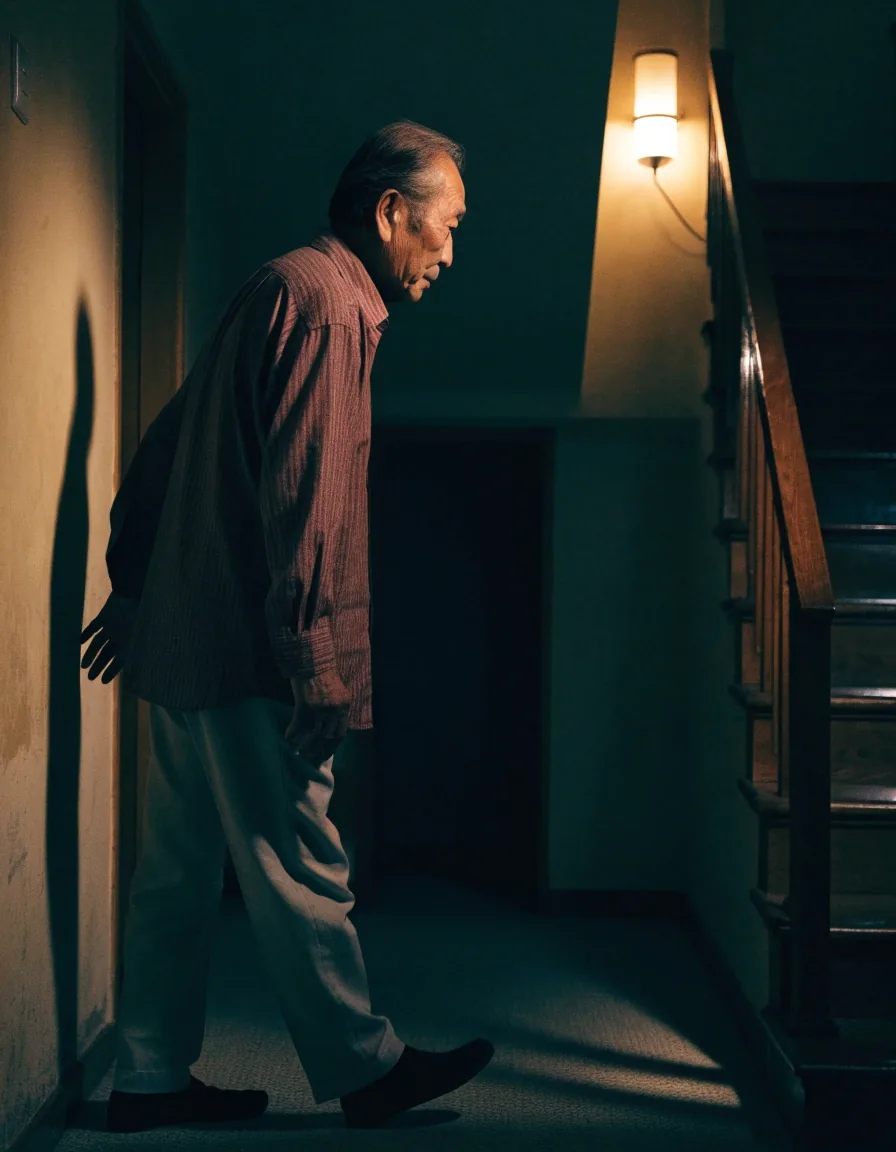
Walking into a cinema from daylight, the eye needs time to adjust. With age that adjustment takes longer, and the final level of sensitivity is lower. This is normal to a degree, but it becomes a real problem when it affects safety: stairs, uneven pavements, and unfamiliar rooms at night.

Low-light vision problems overlap with contrast sensitivity loss and with cataract, since a clouded lens reduces the amount of light reaching the retina. Retinal conditions can contribute too, which is why persistent difficulty in dim light deserves an exam rather than a guess.

Practically, more light at home helps. So does keeping a small torch by the door. Neither replaces an exam, but both are reasonable while you wait for one.

An older man pausing in a dim hallway at night with one hand on the wall near a staircase

Contrast sensitivity: when things stop standing out

Contrast sensitivity is the ability to distinguish an object from its background. It is what lets you see a dark car against dark asphalt, a step edge in shadow, or pale text on a pale screen. It declines with age and with cataract, and it often causes trouble before a standard distance chart shows any problem.

Because contrast loss is invisible on a basic test, people describe it indirectly. Three phrases come up again and again in clinics, and any of them is worth saying out loud even if your chart reading looks fine.

  • Reads as “I can see the sign, I just cannot read it.”
  • Reads as “I know the step is there, I just cannot see the edge.”
  • Reads as Picking out faces in a crowd becomes slow rather than impossible.

If your vision tests fine but daily life disagrees, contrast sensitivity is one of the first things worth raising at an appointment.

Central versus peripheral vision

Central vision handles detail: reading, recognising faces, watching television. Peripheral vision handles the edges of your field and contributes heavily to navigation and balance. Losing one is a very different experience from losing the other, and the two point in different directions.

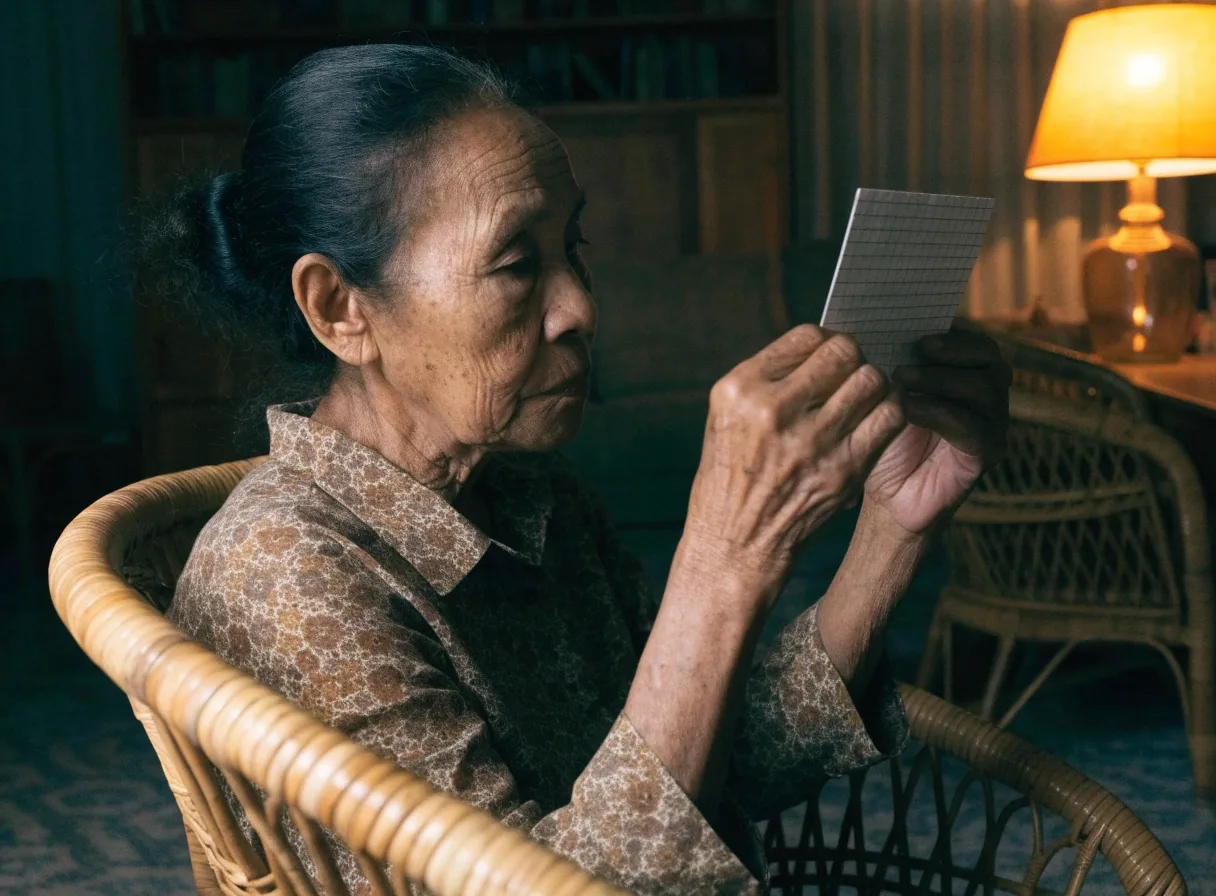
An older woman studying a grid card held at reading distance in a softly lit living room

Central vision

Central distortion or a blank spot in the middle of your vision is associated with macular degeneration. Straight lines looking wavy is a classic description, and it is easy to test at home with a grid. It is not the same as the general softening that comes with presbyopia, and a new prescription does not fix it.

An older man waiting at the edge of a busy pedestrian crossing while traffic passes on both sides

Peripheral vision

Peripheral vision loss is more typical of glaucoma than cataract or presbyopia, and it is often hard to notice because central vision stays clear while the edges quietly narrow. It affects driving, walking, and catching objects before you bump into them. Because it develops silently, it is usually found on exam rather than reported as a symptom.

A plain tiled wall and wooden doorframe photographed at an oblique angle in soft daylight

Wavy lines and distorted shapes

Wavy lines deserve their own mention because they are specific. If a straight doorframe, tile edge, or window frame looks bent, or if a grid of lines ripples in one area, that is distortion rather than blur. It usually localises to the central vision.

Distortion is a recognised warning sign for macular degeneration and warrants a prompt appointment. It can also appear with other retinal conditions. It is not fixed by a new prescription.

One practical habit: if you have a grid at home, check each eye separately, on a regular schedule, with your glasses on. Note any change and bring the note with you.

Colour desaturation and faded shades

Colours losing intensity is one of the quieter age related vision symptoms. Blues may look darker or harder to separate from black. Reds may seem muted. The world can take on a slightly yellow or brown cast as the lens ages.

Cataract and macular degeneration can both contribute. Because it develops over years, it is easy to assume your memory of the colour is wrong rather than your perception of it. Family members often notice first.

Colour changes alone are rarely urgent. Combined with distortion, a sudden change in one eye, or a marked difference between eyes, they are worth a prompt exam.

A market stall tray of red chillies beside aubergines and green limes under an awning
An older woman at a desk in the evening pressing two fingers gently against her closed eyelids

Dry eye can imitate poor eyesight

Dry eye syndrome is an ocular-surface problem, not a focus problem, but it produces symptoms that feel like both. Irritation, a gritty sensation, discomfort, and vision that fluctuates from blink to blink are typical. It gets more common with age, and it can be associated with glare and visual tiredness.

Reading and screen use often make it worse, because both reduce blink rate. The blur is characteristically unstable: sharper right after a blink, softer a few seconds later. That pattern is a reasonable clue that the tear film is involved.

If your vision is good in the morning and unreliable by evening, dry eye belongs on the list of explanations to discuss.

Writing a symptom note your doctor can use

Keep it short and factual. Four lines are usually enough, and bringing the note on paper is easier than trying to remember it in the room.

Add anything that stops you doing something: driving at night, reading small print, threading a needle. And add any medication or condition that is relevant, particularly diabetes.

  1. What you notice “Letters merge at the end of a paragraph.”
  2. When it happens “Worse in the evening and in low light.”
  3. Which eye “Right eye worse than left.”
  4. Change over time “Gradually worse over about eight months.”

Questions that come up in the room

Short answers to the three things readers ask most after going through the symptoms above.

Why do straight lines look wavy sometimes? +

Wavy or bent lines in central vision are a distortion symptom, not ordinary blur. It is associated with macular degeneration and other retinal conditions, and it should be checked promptly rather than watched for months.

Why is night driving harder as people get older? +

Several changes stack up. The pupil opens wider in the dark, contrast sensitivity drops, glare from oncoming lights scatters more, and recovery from bright light takes longer. Cataract and dry eye can make all of it worse.

Can age-related eye problems happen without pain? +

Yes. Glaucoma, diabetic retinopathy and macular degeneration typically cause no pain in their early stages, which is why routine exams matter even when nothing hurts.

An older woman waiting quietly by a sunlit window in a simple eye care waiting room

Bring the note. The description is half the appointment.

If something on this page matched what you have been noticing, that is enough to make the call. The editorial team at Mindful Vision Quest answers questions about content and coverage, and can point you toward the right page for your situation.