
Eye exam & treatment guide
Eye Exams and Treatment Basics
Going in for an eye appointment without knowing what will happen makes it easier to leave out the thing that mattered most. This page covers what a dilated eye exam involves, what the common treatments can and cannot do, and how to prepare so the visit produces useful answers.
None of it is complicated. Most of it is about knowing which questions to ask and which symptoms to mention explicitly, because some of the most important changes are ones people assume aren't worth raising.
Before the drops
What happens before the drops
A typical appointment starts with history, then vision measurement, then pressure and refraction. The history is where you contribute most: what you notice, when it started, which eye, and what has changed in your daily life. Bring notes if that helps.

What you notice, when it started, which eye, and how it interferes with reading, driving, or moving around at night.
Distance acuity first, then near, with and without your current prescription.
Determines whether a new prescription would help, and by how much.
A quick puff or a contact tonometer, and the standard screen for elevated eye pressure.
It's worth mentioning contrast problems and glare explicitly here, because standard acuity testing won't capture them.
Glare and halos tend to get noticed at night, or when you move from a bright street into a dim shop. Acuity charts don't reproduce that. Say it out loud in the room, even if it feels minor.
The dilated eye exam, step by step
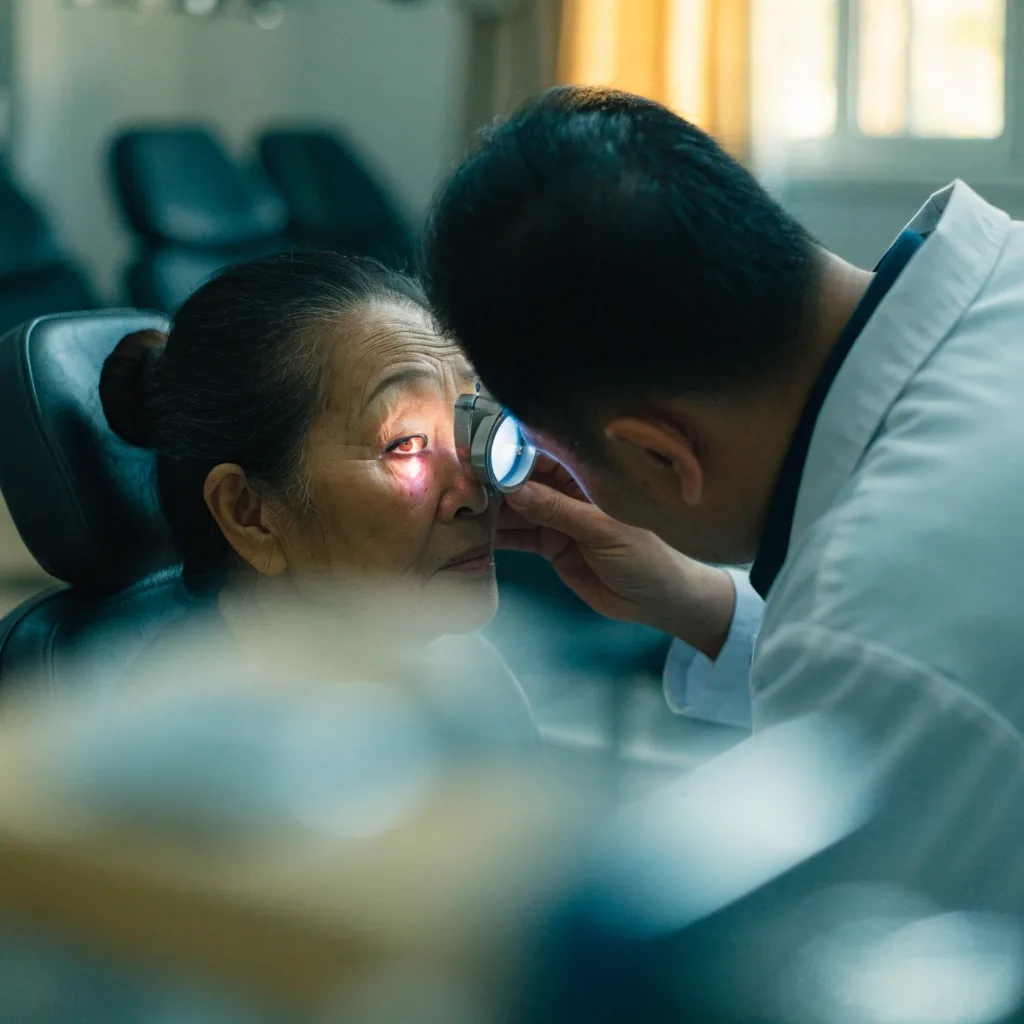
Dilating drops widen the pupil so the clinician can see the lens, optic nerve and retina directly. The drops take roughly 15 to 30 minutes to work, and the exam itself is usually brief.
Expect blurry near vision and sensitivity to light for several hours afterwards. Distance vision is often less affected than near vision, but this varies. Bring sunglasses, and don't plan to drive yourself home if you can avoid it. Reading and screen use are easier the next day.

15–30 min
typical time for the drops to work before the exam begins
A few hours
of blurry near vision and light sensitivity afterwards
Next day
when reading and screen use usually feel normal again
The reason this exam matters is that it's how glaucoma, diabetic retinopathy and macular changes get found before symptoms make them obvious. A vision test alone doesn't do that.
Cataract surgery
What cataract surgery does and doesn't fix
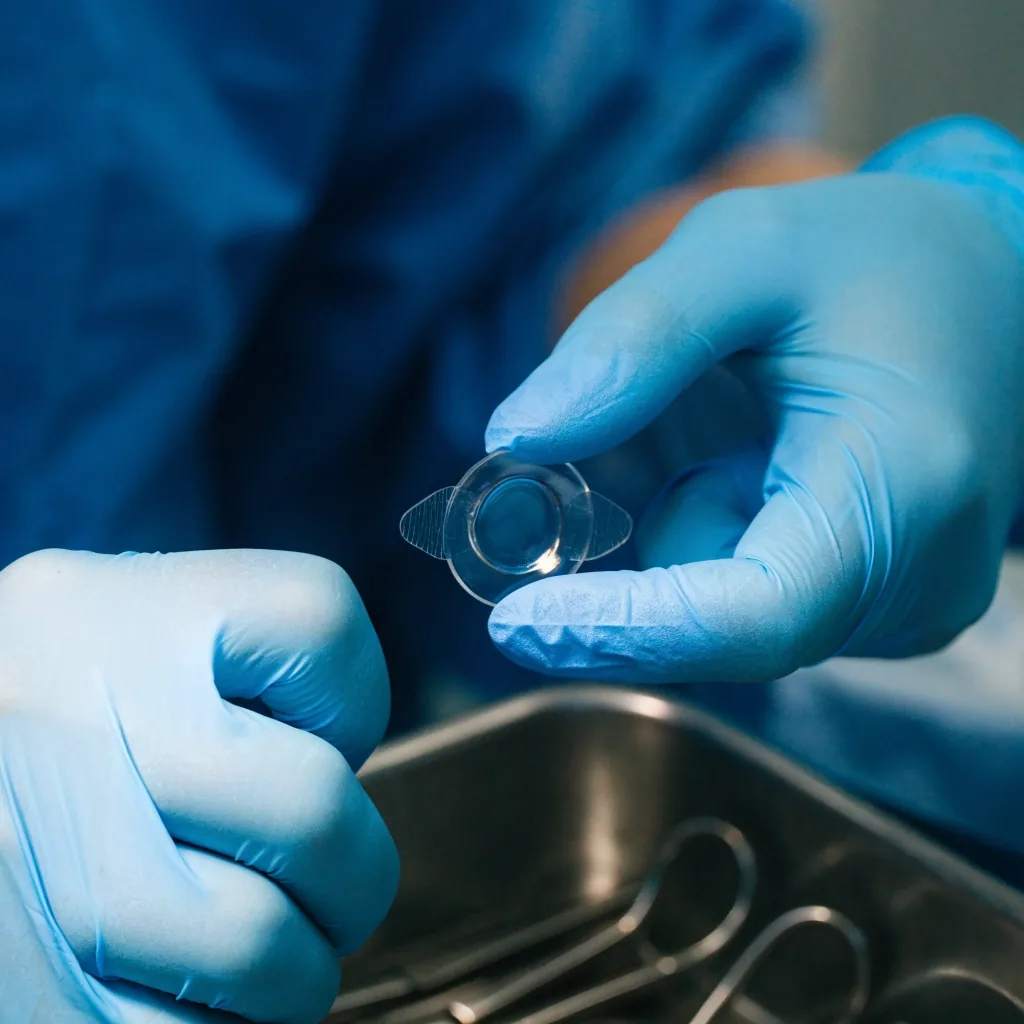
Cataract surgery replaces the clouded lens with an artificial one. It's typically discussed once symptoms affect daily activities rather than at a fixed severity level.
What it addresses is lens clouding. It generally restores brightness and contrast, and reduces glare and halos. That's often what people notice first: colours look stronger and lights stop scattering. Fine detail recovery depends on the rest of the eye, and the procedure doesn't treat retinal disease or optic nerve damage. If macular degeneration or glaucoma is also present, those continue to need their own management.
Brightness, contrast, glare scattering and halos around lights.
Retinal disease, optic nerve damage and any ongoing glaucoma management.
A meaningful improvement in the quality of light, with detail recovery depending on the health of the retina and nerve.
Clouded lens
The part of the eye this operation actually replaces.
Retina & optic nerve
Monitored separately; surgery doesn't resolve their problems.
If you want the broader picture of how normal change differs from disease, compare normal aging and eye disease.
Refractive error & presbyopia
Refractive correction and presbyopia
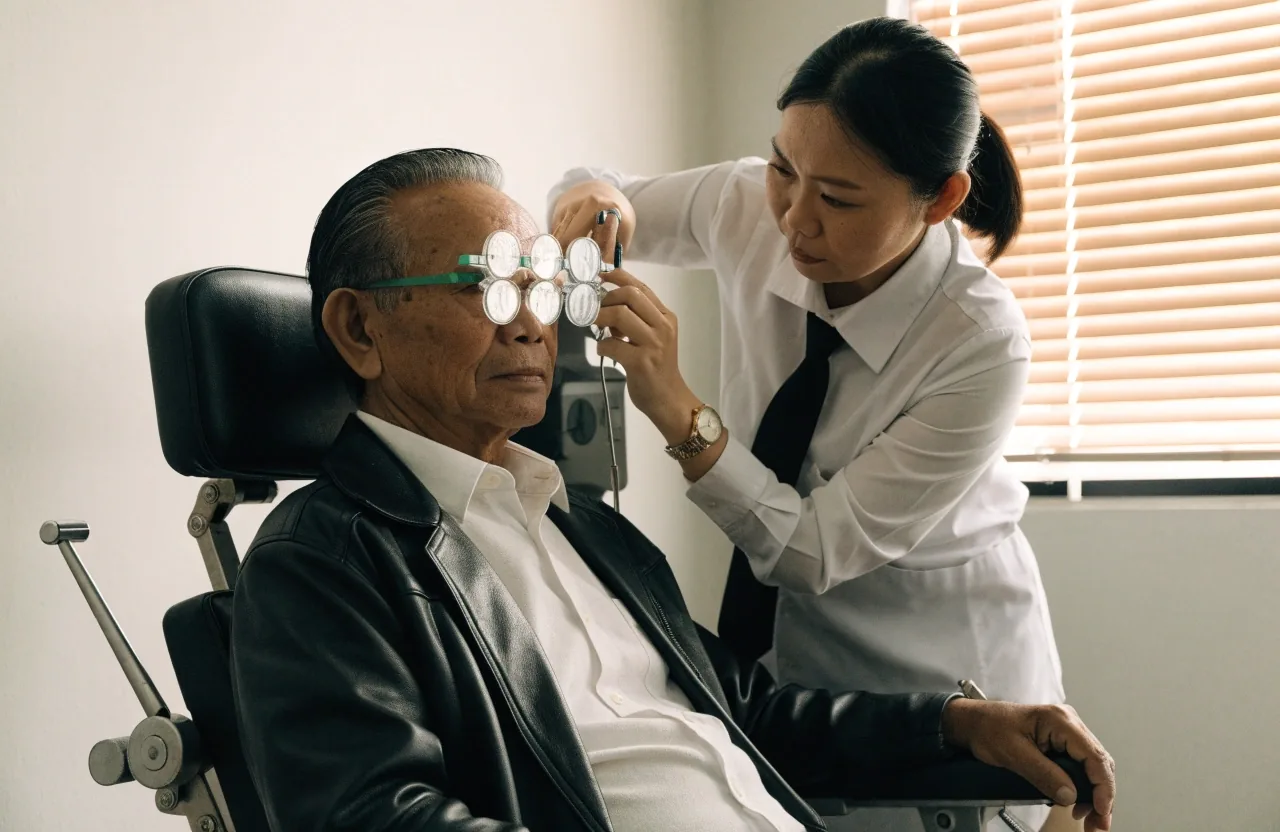
Refractive error is a focus problem, and it's corrected with glasses or contact lenses in most cases. Depending on the type, it affects distance vision, near vision, or both.
Presbyopia is the age-related loss of near focus and it's universal to some degree after 40. It coexists with other refractive errors, which is why a single pair of progressive or bifocal lenses often has to solve two problems at once.
The useful signal here is response to correction. If a new prescription resolves the blur, the cause was optical. If blur persists or returns quickly, the explanation lies elsewhere and deserves investigation.
Glaucoma: monitoring rather than a one-off fix
Glaucoma management is usually about slowing progression rather than reversing damage. That's why the emphasis falls on pressure control and regular field testing rather than a single treatment event.
Options typically include eye drops, laser treatment, and surgery, with the choice depending on the type and severity. What matters for the patient is adherence and follow-up. Missed drops and missed appointments are the main reasons glaucoma progresses faster than it needs to.
Because peripheral vision loss is hard to self-monitor, the clinical tests carry the information. That's the practical reason to keep the schedule even when nothing feels different.
Eye drops
The most common starting approach, and the one most dependent on routine.
Laser treatment
Chosen according to the type and severity of the case.
Surgery
Reserved for situations the earlier options don't hold.
The schedule itself is the treatment. If you want the daily-living consequences of peripheral loss, read about low vision and daily living.

Diabetic retinopathy: why the schedule is the treatment
In its early stages, diabetic retinopathy often produces no symptoms, so detection depends on scheduled retinal exams in people with diabetes. Once it advances, treatment options include laser therapy and injections, aimed at preventing further loss.
Blood sugar and blood pressure control influence how quickly it progresses. That makes it one of the areas where general health management and eye care overlap directly.
If you have diabetes, ask specifically when your next retinal exam is due. It's a question that's easy to lose between appointments.
Surface problems
Dry eye and surface problems
Dry eye syndrome is common with age and can cause irritation, discomfort and fluctuating blur, and it can be associated with glare and visual tiredness. It's a surface problem rather than a disease of the retina or nerve.
Management usually combines artificial tears, environmental adjustments such as reducing direct airflow, and treating any underlying cause. Screen use and reading reduce blink rate, which is why symptoms often peak during those activities.
It's worth treating because an unstable tear film adds a layer of blur and glare on top of whatever else is happening, which makes everything harder to assess.

Questions worth asking in the room
Bring a short list. Write the answers down. It's common to forget half of them by the time you reach the car park.
Contact the editorial team-
1
Which of my symptoms is explained by what you found?
-
2
Is this correctable with glasses?
-
3
Do I need a dilated exam today, and when is the next one due?
-
4
What should prompt an earlier visit?
-
5
If a diagnosis is made, what does the treatment aim to achieve, and what won't it achieve?
-
6
Is the condition stable, progressing, or being actively managed?
-
7
Should the other eye be checked separately?
Answers to common questions
How long do dilating drops last?
Typically a few hours. Near vision stays blurry and light feels uncomfortably bright for that period. Distance vision is often less affected, but it varies between people and between drop types.
Does cataract surgery fix everything?
No. It addresses the clouded lens, and it usually improves brightness, contrast and glare. It doesn't treat retinal disease or optic nerve damage, which continue to need separate management if present.
Can refractive error and cataract occur together?
Yes, and they often do in older adults. A new prescription may help for a while before cataract progression makes the improvement fade, which is one reason an exam matters when glasses stop working.
Where to go next
The pages below continue the same thread, from first symptoms through to daily life.
Editorial team
Reach the people who wrote this
If a term on this page is unclear, or you want to point us at something we should cover next, write to us. We answer questions about eye exams and treatment basics during working hours.
Monday to Friday, 9:00 AM – 6:00 PM (WIB)