

Low vision in practice
Low Vision and Everyday Living
Low vision is defined by function, not by a number. It means sight that can't be fully corrected with standard glasses, contact lenses, or surgery to meet the demands of daily life. Reading mail, cooking, recognising faces across a room, and finding your way through an unfamiliar building are the tasks that expose it first.
What low vision actually means
The term describes a functional shortfall rather than a specific disease. Two people with the same diagnosis can live with very different levels of low vision, depending on how far the condition has progressed and what their days demand of their eyes.
It can come from advanced eye disease, or from several conditions stacking on top of each other — cataract plus macular degeneration, or glaucoma alongside dry eye. When problems overlap, treating the correctable parts first sometimes improves things more than expected. That is why a current exam matters before you spend money on equipment.
It is also worth knowing that low vision is not the same as blindness. Most people with low vision keep useful sight, and the work is about using what remains more effectively — through lighting, contrast, and the right tools for the right task.
Some of the change is equipment. More of it is lighting, contrast, and how a room is arranged. None of it is a cure — but small adjustments often recover a meaningful amount of independence.
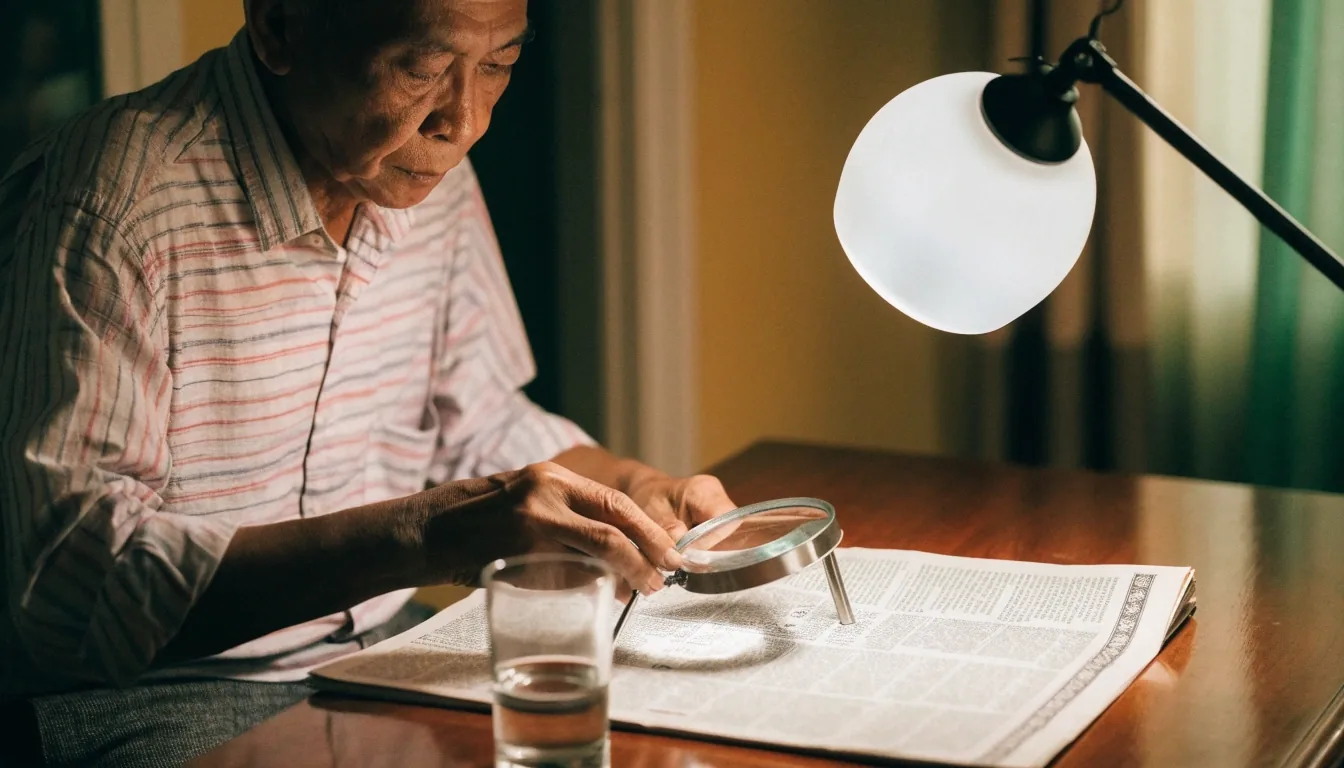
Reading: lighting first, magnification second
Reading is the task people miss most. The instinct is to buy magnification, but improving the light usually delivers more improvement per rupiah. Even, bright, glare-free light positioned to the side rather than behind you reduces shadows on the page and lifts contrast where letters meet paper.
Magnifiers come next, and they are not interchangeable. Large-print materials, audiobooks, and text-to-speech on a phone are legitimate tools rather than concessions — many people keep a mix and choose per task.
Handheld magnifiers
Suited to short tasks where you move the lens over a small area — price tags, labels, a phone keypad.
Stand magnifiers
Hold a fixed distance from the page, which steadies the view when hand tremor or fatigue is part of the picture.
Electronic reading aids
Allow adjustable contrast and brightness, which matters when contrast sensitivity is the main problem rather than letter size.
Contrast in the kitchen and around the home
Contrast sensitivity loss makes objects disappear against similar backgrounds. In the kitchen that means a dark pan on a dark hob, or a clear glass of water sitting on a pale counter. Simple fixes work well and cost little. Light counters under dark chopping boards, coloured tape along worktop edges, and contrasting handles on the drawers you open every day all reduce the number of near-misses.

Labeling and routine
Large-print or high-contrast labelling on containers, medications, and appliance dials cuts down errors. Keep frequently used items in fixed positions so you can reach for them by memory — when things move, the visual search starts over each time.
A useful signal
If cooking has become risky rather than merely awkward, that is a signal to change how the kitchen is set up rather than to push through. Rearranging counters, handles, and lighting is usually cheaper and faster than adapting your technique alone.
Recognising faces and following conversation
Recognising faces is a specific and socially significant difficulty. It often shows up before reading problems in conditions that affect central vision, because faces rely on fine detail rather than on large shapes. Not recognising someone across a room can be misread as rudeness by people who don't know about the vision change.
Pre-emptive honesty helps. Telling regular contacts that you may not recognise them at a distance saves a lot of awkwardness at the school gate or in the office corridor. Positioning yourself close to a speaker, with light on their face rather than behind them, makes features easier to read.
In group settings
- Sit where you can see the people speaking rather than the back of the room.
- Ask people to say your name before speaking to you, so you know who is talking.
- Choose a seat where faces are lit from the front, not silhouetted against a bright window.
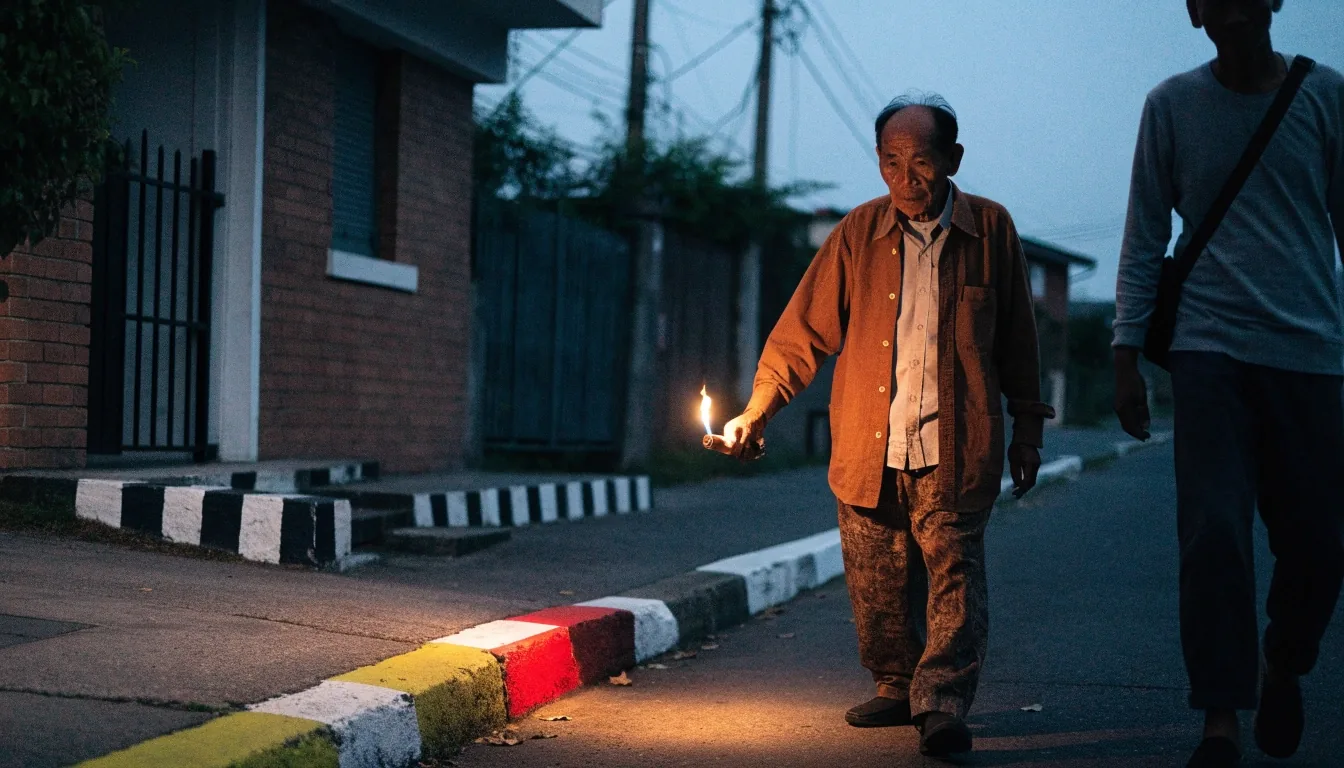
Navigating streets and public buildings
Peripheral vision loss and contrast loss both hit navigation hard. Kerb edges blend into the road, steps lose their edge, and obstacles appear later than they should. Walking speed usually adjusts before conscious awareness does — many people notice they have slowed down long before they can say why.
Practical measures include a torch for evening walks, walking with someone in unfamiliar areas, and sticking to routes you know. For significant peripheral loss, orientation and mobility training with a cane is a real option, and it is about safety and confidence rather than appearance.
Inside public buildings, look for the high-contrast markings many now use on stairs and glass doors. They help precisely because contrast is the problem — the same reason a bright handrail beats a brushed steel one against a glass wall.
It helps to slow your return to bright or dark spaces too. Dark adaptation slows with age, so give your eyes a moment when you step from a lit lobby into a night street, or from a bright afternoon into a shaded corridor.
Driving, and knowing when to stop
Driving sits at the intersection of several symptoms. Glare sensitivity makes night driving stressful. Contrast loss reduces how early you spot hazards. Peripheral loss affects what you notice at intersections. Slower dark adaptation means the first minutes after leaving a lit area are the riskiest stretch of any trip.
Still manageable
Cleaning the windscreen inside and out, avoiding night driving, keeping the dashboard dim, and getting the right prescription for driving specifically.
Limits, not puzzles
Some changes are limits rather than problems to solve with better habits alone. Naming them plainly makes the conversation with a clinician easier.
The sensible approach is to have your vision checked and to discuss driving explicitly. Many people self-restrict to daylight and short routes long before anyone asks them to, and that is a reasonable middle ground rather than a failure.

Dry eye makes everything harder
Dry eye syndrome adds discomfort and fluctuating blurred vision on top of whatever else is going on. It is common with age and can be linked with glare and visual tiredness, which compounds contrast and low-light problems during the activities you most want to keep doing.
Reading and screen use both reduce blink rate, so symptoms often peak in the evening. Deliberate blinking, regular breaks, and discussing tear options with a clinician are the usual routes. Screen settings that reduce glare, and positioning screens below eye level, help some people.
Treating the surface problem will not cure a retinal condition, but it can remove a layer of blur that makes everything else feel worse than it is.
Equipment worth discussing with a professional
Low vision aids work best when they are matched to your specific tasks and your specific vision. Buying a magnifier online before an assessment often wastes money, because the power that suits reading a medicine label is rarely the power that suits reading a book.
What an assessment covers
Which tasks you want to recover, what magnification is useful, whether contrast enhancement or lighting matters more, and whether electronic aids suit how you live.
Non-optical tools
Reading stands, typoscopes that mask surrounding lines, and large-button phones often do more for daily routines than a stronger lens on its own.
Come with a task list
Bring the specific tasks that have become difficult. "I want to read my grandchildren's school reports" is more useful to work from than "I want to read better."
Questions people ask first
Short answers to the three questions that come up most often when low vision starts to affect daily routines.
Is low vision the same as blindness?
No. Low vision describes vision that can't be fully corrected to meet everyday needs. Most people with low vision still have useful sight, and the goal is to use it more effectively with lighting, contrast, and aids.
Will new glasses fix low vision?
Standard glasses correct refractive error, which is worth ruling out first. If vision remains difficult after correction, the shortfall comes from the eye itself, and aids and environment changes become the main tools.
What should I bring to a low vision assessment?
A list of specific tasks that have become hard, the lighting conditions where you struggle most, and any aids you have already tried. Concrete tasks make the assessment more useful than general statements.

Where to go next
If the changes you are describing sound like low vision rather than ordinary ageing, the next step is a current eye exam. The exam and treatment basics page walks through what is checked and what the common treatments cover, while the normal ageing comparison helps you tell the two apart before you book.
You can also look at how vision after 50 tends to look across Indonesia, or write to the editorial team with a question about anything on this page.
Mindful Vision Quest, Jl. Cikini Raya No. 58, Menteng, Jakarta Pusat, DKI Jakarta 10330. Monday to Friday, 9:00 AM – 6:00 PM (WIB).