

Mindful Vision Quest Mindful Vision Quest
An older woman at a table covering one eye to compare how clearly each eye sees a printed page

Age-related vision symptoms

Normal aging or eye disease?

The question we get asked most is also the hardest to answer from a distance: is this just getting older, or is something wrong? No exam-free answer exists, but the pattern of a symptom carries a lot of information.

A comparison guide, not a diagnosis

This page lays the patterns side by side. Onset speed, whether a change affects one eye or two, and whether it arrives with pain or distortion all point in different directions. The honest summary is simple: anything sudden or one-sided belongs in an appointment, not in a waiting period.

By the end you should know which signs you can reasonably watch across months, which ones wait for a scheduled visit, and which ones mean you stop reading and call an eye care professional today. If you want the broader picture first, the vision symptoms guide walks through each symptom on its own terms.

The speed test: days versus months

Most age-related change is slow. Presbyopia develops across years, not weeks. Cataract typically takes years to reach the point where it interferes with daily life. Contrast sensitivity declines gradually enough that people adapt without noticing the moment it changed.

Disease can be slow too, which is what complicates the comparison. Glaucoma and early diabetic retinopathy are notoriously gradual. But when something changes over days, or over a single afternoon, the odds shift. Sudden vision loss, a curtain across part of the field, or a burst of new floaters are not aging patterns.

Use speed as your first filter, then check the eye patterns below.

Timeline of a change

  • Months to years

    Presbyopia, contrast sensitivity, and the early stages of cataract usually arrive this way. Watch, note, and bring your notes to a routine exam.

  • Days

    Blur, fluctuation, or sharpness that moves from day to day does not follow an aging curve. It usually means something measurable is going on.

  • Hours

    Sudden loss, a shadow moving across the field, or a new shower of floaters. Stop comparing and seek same-day care.

One eye or both

Symmetry matters. Aging changes usually affect both eyes to a similar degree, even when they do not feel identical because the starting prescriptions differ. Presbyopia arrives in both eyes. Cataract usually develops in both, though sometimes one is ahead of the other.

A change that is clearly one-sided is a different signal. Sudden loss in one eye, distortion in one eye only, or a colour difference between eyes warrants prompt assessment. When checking at home, cover each eye separately. It is a two-minute habit that catches asymmetry early.

Both eyes, similar

Presbyopia, typical cataract progression, gradual contrast loss. Both eyes drift in the same direction at roughly the same rate.

One eye, clearly ahead

A cataract that matured faster in one eye, or a refractive difference that has shifted. Usually routine, but worth reporting at your next visit.

One eye, sudden

Loss, distortion, or a colour shift that arrived quickly in a single eye. This is an appointment today, not a note for later.

An older man sitting at the edge of a bed at dusk, holding his temple, bothered by discomfort in his vision

Pain, flashes, floaters, and shadows

Normal aging does not hurt. Dry eye produces irritation and grittiness rather than pain, and it is a surface problem rather than a disease of the eye's internal structures. Anything described as genuine pain, especially with nausea, headache, or redness, needs same-day attention.

Flashes of light, a sudden shower of floaters, or a shadow or curtain moving across your vision are retinal warning signs. They are not part of normal aging, and they should not be observed at home for a few days to see what happens.

This is one of the few places on this site where we would say: do not finish reading the page first.

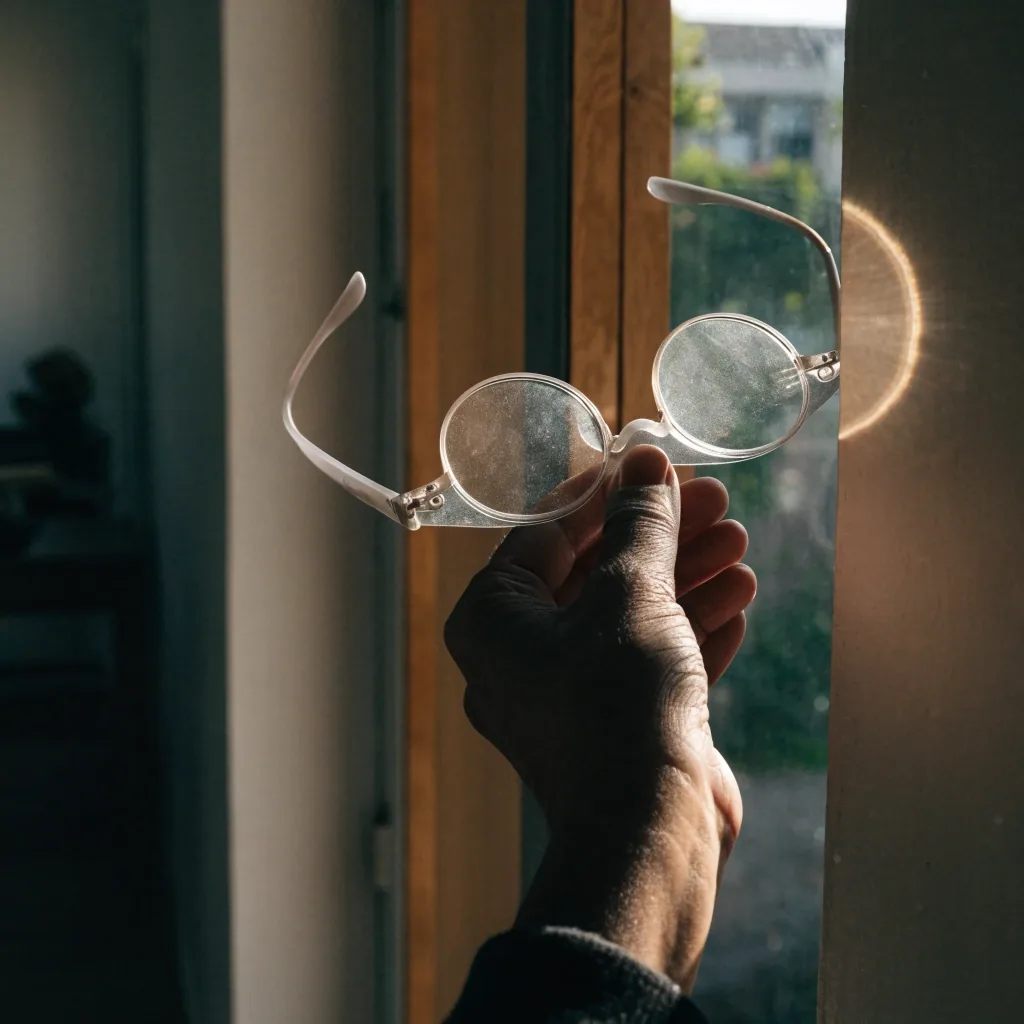
Reading glasses held up to window light, the lens catching a halo of glare

Cataract: cloudy, gradual, both eyes

Cataract is a clouding of the lens. The typical pattern is slow, painless, bilateral, and progressive. Glare sensitivity, halos around lights, faded colours, and a general dimming of the world fit alongside it. New glasses may help for a while, then stop helping.

The distinguishing feature is that it is a lens problem, not a retina or nerve problem, so it affects the whole field rather than a patch. It does not produce distortion or a blank spot in the centre. Treatment, when symptoms start interfering with daily activities, is surgical. Cataract surgery addresses the clouded lens and often restores brightness and contrast more noticeably than fine detail.


A hand reaching for a bowl on a kitchen counter, the peripheral edge of the scene dim

Glaucoma: silent peripheral loss

Glaucoma damages the optic nerve, usually in connection with eye pressure, and it affects peripheral vision first. Central vision can stay sharp for a long time, which is exactly why it goes unnoticed. There is typically no pain and no obvious blur.

The practical implication is that glaucoma is found on examination, not by symptom. Peripheral vision loss shows up in daily life as bumping into objects, missing things at the edge of a table, or difficulty noticing a car approaching from the side. By the time those become obvious, a meaningful amount of field may already be gone.

If glaucoma runs in your family, or if you have diabetes or high eye pressure, scheduled exams matter more than symptom-watching.

Macular degeneration: central and distorted

Macular degeneration affects the macula, the part of the retina responsible for sharp central vision. Reading, recognising faces, and seeing fine detail are the first casualties. Peripheral vision often remains, which is why people can still navigate a room while struggling to read.

The wavy-line test

Wavy lines are the signature description. A straight edge appearing bent, or a grid rippling in one area, is a recognised warning sign. Central blur or a blank or dark spot in the middle of the field is another.

Unlike cataract, this is a retinal problem. New glasses will not fix it, and distortion is not something to monitor for months.

If a doorway frame or a window grille looks bent this week and did not last month, treat that as a reason to book, not a reason to keep watching.

Diabetic retinopathy: silent early, then specific

Diabetic retinopathy affects the small blood vessels of the retina. In its early stages it usually causes no symptoms at all, which is why anyone with diabetes is advised to have regular retinal examinations regardless of how well they see.

Stage

What you tend to notice

Early

Nothing at all. Vision can be sharp and still hide vessel damage. This is why the exam schedule, not the symptom list, is the check.

Advancing

Floaters, blurred vision, fluctuating sharpness, and patches of vision loss. The fluctuation is sometimes tied to blood sugar levels themselves, since changing lens hydration can shift focus temporarily.

The pattern to remember

This is a condition where the absence of symptoms means nothing reassuring. If you have diabetes, the exam schedule is the symptom check.

Refractive error and presbyopia: correctable by definition

Refractive error means the eye does not focus light cleanly on the retina. It can blur distance, near, or both, and it is correctable with glasses or contact lenses in most cases. It is one of the leading causes of visual impairment in Indonesia alongside cataract, which is worth knowing because it is the part that is straightforward to fix.

Presbyopia is a specific, universal age change in near focus. It arrives gradually after 40 and coexists with other refractive errors in older adults. It does not damage the eye.

The useful test is response to correction. If new glasses resolve the problem cleanly, the explanation was optical. If blur persists or returns, other causes get investigated.

An older woman trying on trial glasses at an optical fitting table with several frames laid out in front of her

A short comparison table you can copy

Read this as a thinking aid, then use it with your notes. The table does not replace an exam, and it cannot account for combinations, which are common in older adults.

Patterns that lean toward normal aging compared with patterns that lean toward eye disease
Pattern Leans toward normal aging Leans toward disease
Onset Months to years Days, hours, or sudden
Eyes affected Both, similar One eye clearly worse
Pain None Pain, nausea, redness
Location Whole field, dimmer Central patch, or peripheral edges
Distortion Not typical Wavy lines, bent edges
New glasses Improves Does not improve, or fades
Floaters or flashes Stable, long-standing New, sudden, with shadow
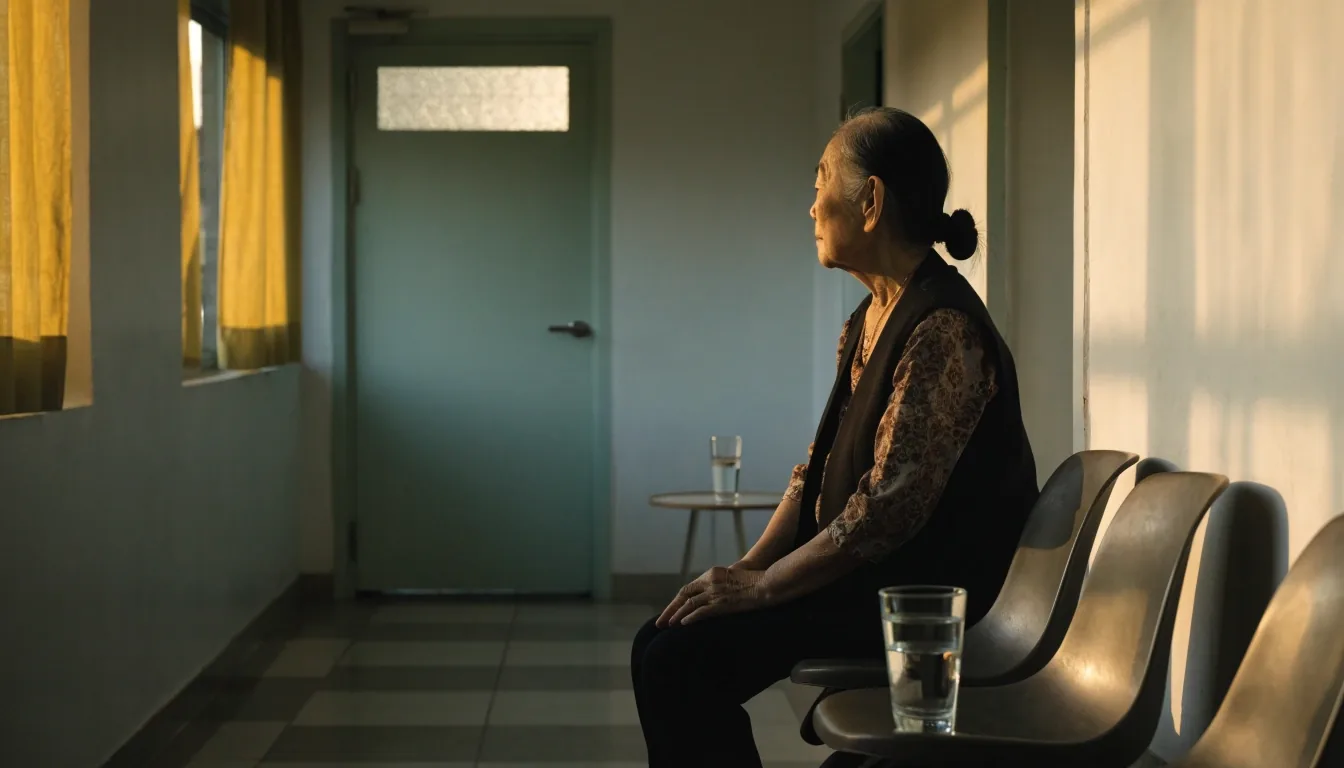
A quiet eye clinic waiting area in the late afternoon with soft daylight on empty chairs

When to stop comparing and book an exam

Book promptly if

  • Sudden change, in one eye or both
  • A change in one eye only
  • Pain, with or without nausea or redness
  • New flashes or a sudden shower of floaters
  • A shadow or curtain across part of the field
  • Wavy lines or a blank spot in central vision

Book routinely, but do not skip it, if

  • You have diabetes
  • Glaucoma runs in your family
  • You are over 50 and have not had a dilated exam in a while
  • Something changed, even if you cannot describe it yet

A reader who says "I just want to know whether this is normal" is asking exactly the right question, and it is one an eye care professional can answer in a single visit.

Questions we hear most often

Can I tell cataract from glaucoma on my own?

Not reliably. Cataract usually announces itself with glare, haze and dimming in both eyes. Glaucoma tends to be silent and shows up first in peripheral vision. Only an exam separates them, and they can occur together.

Does normal aging ever cause distortion?

Distortion, where straight lines look bent or wavy, is not a typical feature of normal aging. It is a recognised warning sign for retinal problems and should be assessed promptly.

Are floaters normal?

Long-standing floaters that have been stable for years are common. A sudden shower of new floaters, especially with flashes or a shadow across your vision, is not and needs urgent attention.

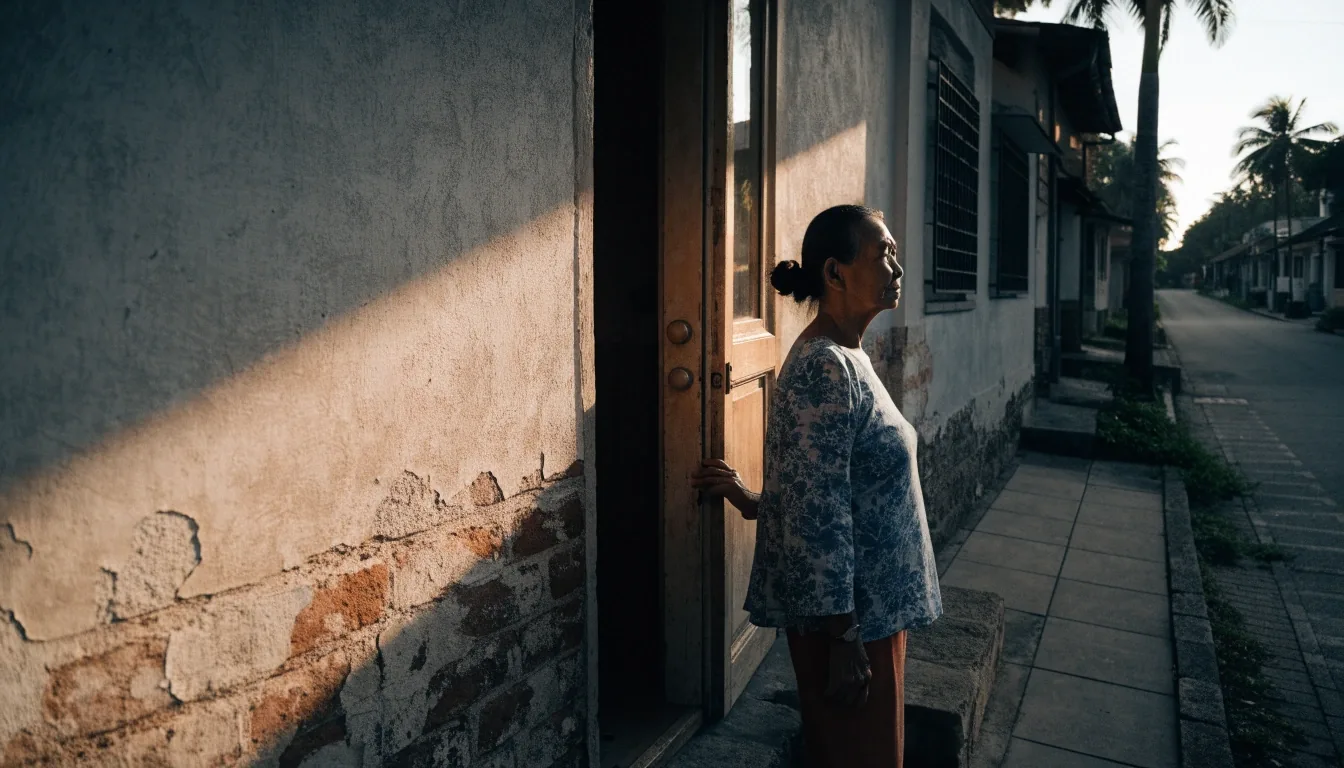
A quiet Jakarta street and front doorway at golden hour, warm light across the pavement

Where to go next

If anything on this page sounded like what you are living with, the next step is a conversation with an eye care professional, not more reading. If you want background first, these pages continue the thread.

Mindful Vision Quest

Jl. Cikini Raya No. 58, Menteng, Jakarta Pusat, DKI Jakarta 10330, Indonesia. We answer questions Monday to Friday, 9:00 AM – 6:00 PM WIB.