

Jakarta and beyond, for readers fifty and older
Vision after fifty in Indonesia
WHO has reported around 15 million people aged 50 and over in Indonesia living with visual impairment, with cataract and refractive error named as the leading causes. This page explains what those numbers mean for you, which conditions hide quietly, and how eye services are reached here.
The national picture
What the numbers actually say
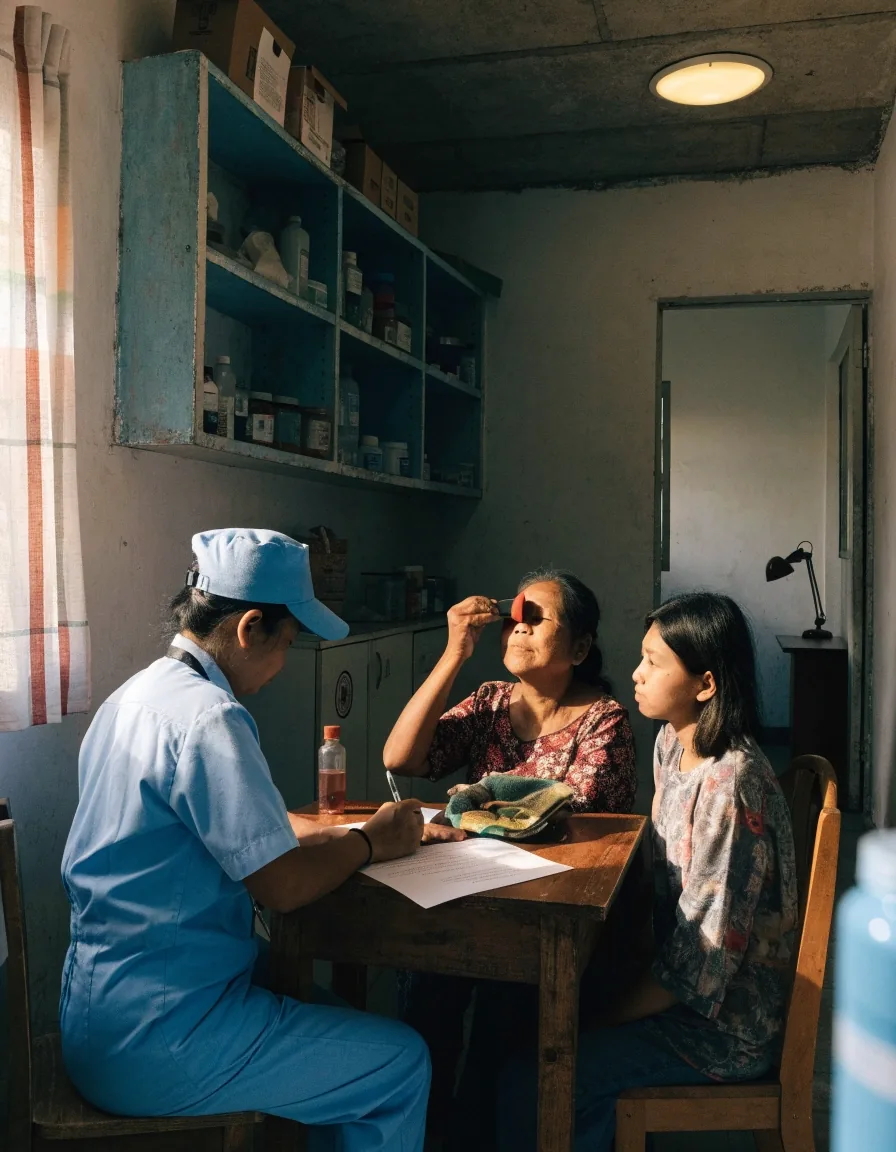
Community screening is often the first time a slow change gets a name put to it.
Cataract and refractive error were cited as the leading causes in that reporting. Both are, in principle, addressable: cataract through surgery, refractive error with glasses or contact lenses, once someone actually measures the prescription.
That matters for symptom education because the conditions pushing these numbers up are the ones where people delay. A cataract develops slowly, so a person quietly adjusts around it. A refractive error drifts, so the prescription in your drawer stops matching your eyes and nobody reassesses it.
Reading about age related vision symptoms does not replace an exam, but it shortens the distance between noticing something and getting it looked at. That gap is where most of the avoidable sight loss in these figures sits.
- Leading cause
- Cataract — the lens dims and yellows
- Second cause
- Refractive error — focus slips out of step
- Both are
- Correctable once assessed
- Why cases pile up
- Slow onset, easy to normalise
Why cataract and refractive error dominate
Both conditions are common, both are age-linked, and both are easy to live with rather than question.
Cataract
The lens inside the eye clouds and takes on a yellow cast, so everything dims evenly — colours lose their bite, headlights spread into starbursts at night, and reading in a dim room stops working. It develops over years, which is exactly why it goes unremarked.
The response is a surgical conversation, and its timing is usually about daily function rather than a fixed rule.
Refractive error
Focus is the problem, so distance work or near work blurs depending on the type — road signs smear, or the phone needs holding further away. Correcting it is the cheapest available improvement to daily vision, yet the change creeps up on people.
Reassessing a prescription is often the whole fix, and it takes one appointment.
They frequently coexist. A cataract patient may also need a new prescription, and from the inside it is genuinely hard to tell which one is causing the current problem. A person whose vision has dimmed across five years may simply stop driving at night and stop reading small print, adjusting their life around the symptom instead of questioning it. That adaptation is the thing to notice — it is how slow change hides.
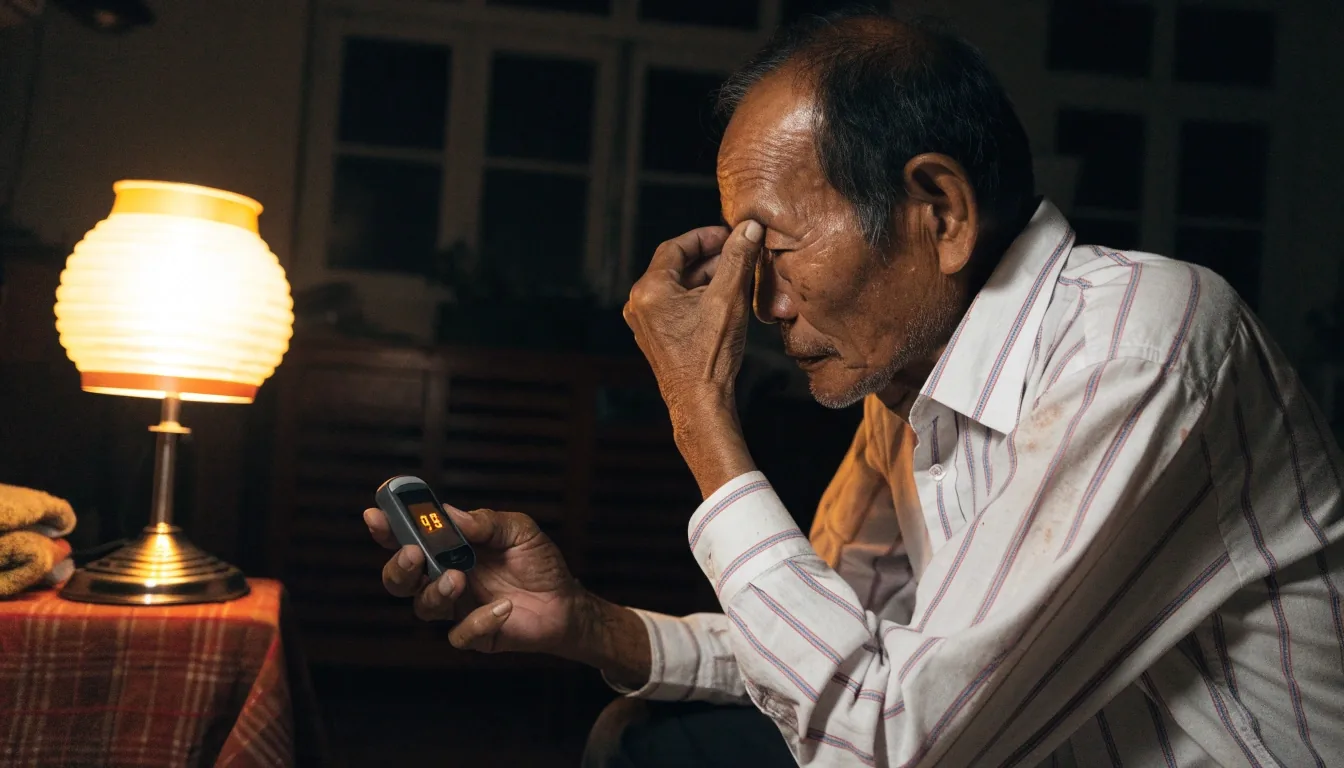
The share that shows no symptom
Glaucoma and diabetic retinopathy: the silent share
Cataract and refractive error explain a large share of visual impairment in Indonesia, but they are not the whole picture. Two other conditions sit in the same statistics and behave very differently.
Glaucoma
Peripheral vision goes first, and it does so painlessly. There is no ache, no redness, no obvious moment when something changes — the sides of your view narrow while the centre stays sharp, so nothing feels wrong until a lot of field is already gone. It is found on examination rather than by symptom, which is the uncomfortable part.
Family history raises the stakes enough to mention it at your next appointment.
Diabetic retinopathy
This one has a long silent phase too, and how common it is tracks with diabetes rates in the population. Changes to the small vessels at the back of the eye can be visible to a clinician well before they disturb reading or driving.
Early detection changes what is possible later. If you live with diabetes, a regular check of the retina is part of managing the diabetes, not an extra.
Both are conditions where finding them early changes the outcome. That is the practical argument for attending scheduled exams even when nothing feels wrong — particularly after 50, particularly with diabetes, and particularly with a family history of glaucoma. If you have been waiting for a symptom to justify an appointment, these two are the reason not to.
Access to eye services: what to expect
Eye care in Indonesia is delivered across a range of settings rather than one front door. Knowing which step comes first saves a wasted trip.
Community health centres
Puskesmas provide primary services in many areas and are usually the sensible first stop, especially outside major cities. They can assess basic vision, advise, and refer onward when a case needs specialist attention.
Hospitals and eye clinics
Specialist assessment, imaging, and surgery happen here. For surgical cases such as cataract, being referred is normally part of the process rather than an optional extra, so expect a two-step route instead of a same-week operation.
National health insurance
Eye services are covered within the national insurance scheme, though what is available varies by region and by facility. Ask what your local provider can handle before assuming a long trip is necessary.
Rural and remote areas
Access is thinner than in the major cities, which is one reason late presentation is common here. If travel is difficult, it is worth asking at your first point of contact what can be handled locally and what genuinely needs a referral.
What a dilated eye exam adds
A basic vision check measures how well you see. A dilated eye exam looks at the structures inside the eye: the lens, the optic nerve, and the retina. Drops widen the pupil so the clinician can actually see the back of the eye properly.
This is the examination that detects glaucoma before peripheral vision loss becomes obvious, and that finds diabetic retinopathy while it is still treatable. It is also how cataract severity gets assessed — the difference between "your lens is a bit cloudy" and "this is why you stopped driving at night".
Before you leave the clinic
- Expect blurred near vision and light sensitivity for a few hours afterwards. Printed pages and phone screens will be hard work.
- Bring sunglasses, and arrange not to drive yourself home if that is a concern. A companion who can also listen to instructions helps.
- Ask which structures were checked and whether a follow-up interval was set. That single question turns a one-off visit into a plan.
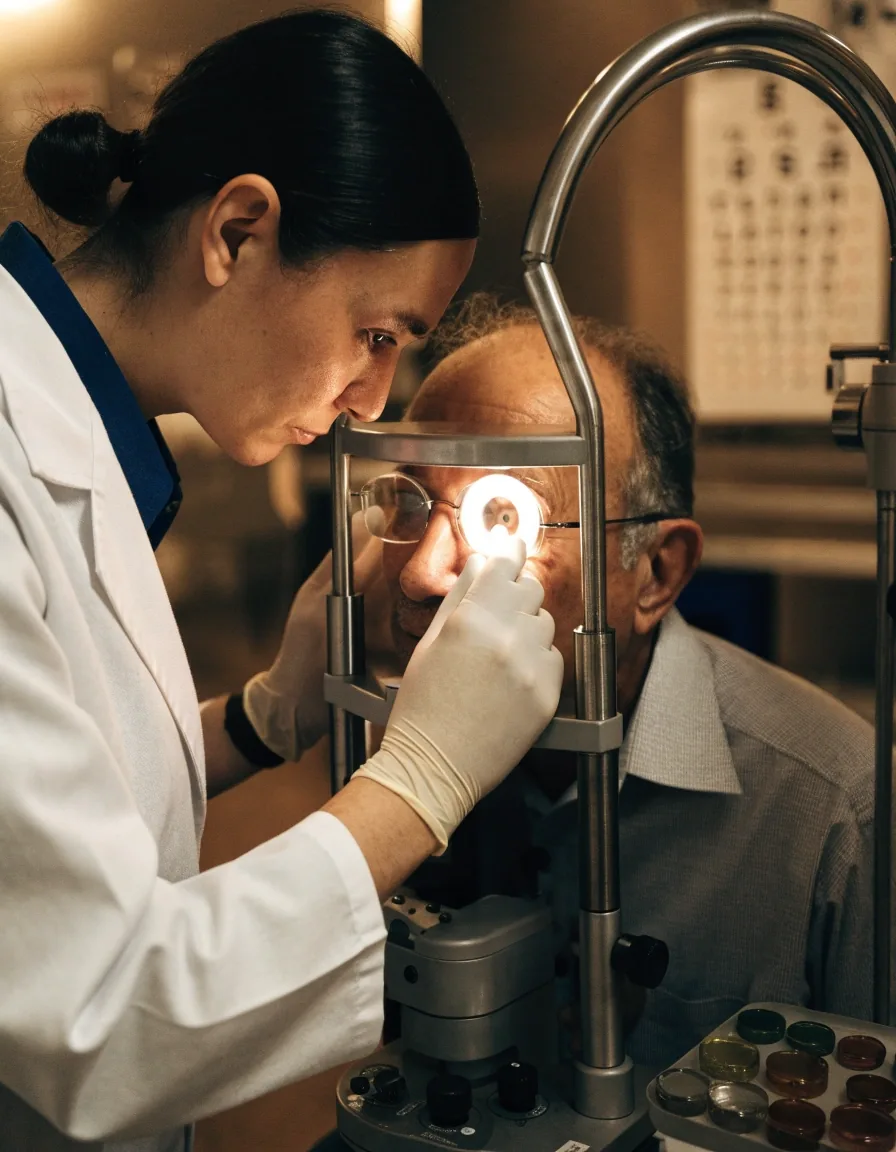
Describing symptoms in a way that helps
Language and access differences can make a consultation harder than it needs to be. The fix is precision, not vocabulary. Name the shape of the change: cloudy, blurred, distorted, glare, edges, centre.
Saying "the centre looks wavy" rather than "my eyes are bad" changes what gets investigated. One description points at the retina; the other is a shrug.
If you are accompanying an older relative, write the description down beforehand and note the timeline. Which eye, how long, what makes it worse, what has stopped being possible — driving at night, threading a needle, reading the small print on a bill.
If the first consultation does not resolve things, that is a reason to seek a second opinion rather than a reason to accept the situation as it is.
Family and carers: how to help someone else get seen
The hardest part is usually the appointment itself, not the journey. Older adults often normalise vision loss as a part of aging, and they may have adapted so thoroughly that the adaptation hides the problem from everyone including themselves.
Practical approaches work better than warnings. Point out one specific change: no longer reading the newspaper, or not recognising people across the room at the mosque or church. It is harder to argue with a detail than with a general worry.
Offer to handle the transport and to go in with them — a second set of ears helps when instructions come quickly. Avoid framing the visit as a loss of independence. Framing it as getting the correctable things corrected tends to land better.
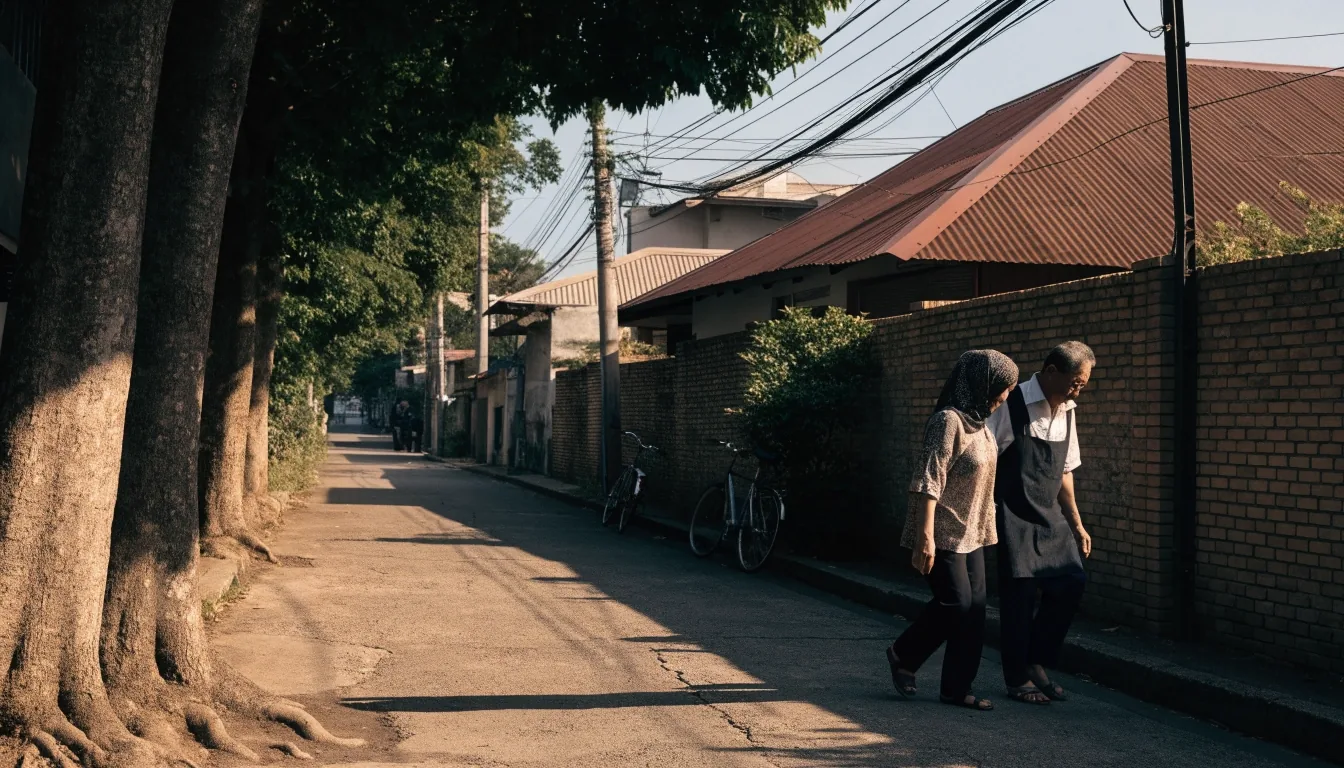
What holds up over time
The pattern that holds is unglamorous: regular dilated exams, an up-to-date prescription, and attention to symptoms that change quickly or affect one eye more than the other. No supplement and no screen filter substitutes for that.
For cataract, the timing decision is about daily function rather than a fixed rule. For refractive error, correcting it is the cheapest available improvement to daily vision. For glaucoma and diabetic retinopathy, the whole value sits in finding them early, when more is still possible.
If you take one thing from this page, take this: late presentation is common in Indonesia, and it is the part you can personally avoid.
Questions readers ask
Short answers to the points that come up most often about visual impairment and eye care access in Indonesia. Nothing here replaces an examination.
How common is visual impairment among older adults in Indonesia?
WHO has reported around 15 million people aged 50 and over in Indonesia experiencing visual impairment, with cataract and refractive errors cited as leading causes. Many of those cases are considered avoidable with timely care — which is why the diagnosis delays matter more than the raw count.
Does national health insurance cover eye care?
Eye services are covered within the national insurance scheme, though what is available varies by region and facility. Community health centres are often the first point of contact and can refer onward when specialist care is needed, so it is worth asking locally before planning travel.
Why do so many people get diagnosed late?
Cataract, glaucoma and diabetic retinopathy all develop slowly and painlessly, so people adapt their habits instead of seeking care. Limited access in rural areas adds to the delay. Both halves are addressable — the habits by naming a specific change, the access by asking what your local facility can do.